Lock It Up, Cash Out Later: How Patient Collectors Are Leaving Flippers in the Dust
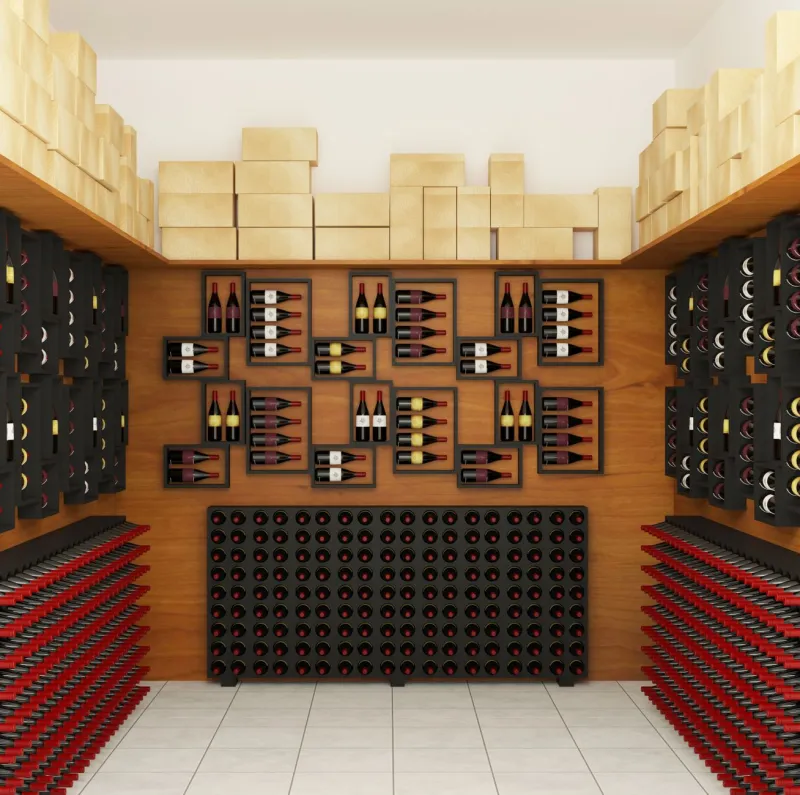
There's a certain type of collector you'll never see bragging on Reddit forums or posting haul videos every other week. They buy something exceptional, tuck it away in a temperature-regulated, humidity-controlled storage unit, and then — here's the wild part — they just wait. No constant refreshing of eBay sold listings. No panic-selling when the market dips. No FOMO when a competing category catches fire.
And according to the numbers, that boring, almost painfully patient strategy is quietly crushing the returns of collectors who trade like hyperactive day traders.
Welcome to what some in the hobby are calling the Vault Effect — the compounding appreciation that kicks in when quality pieces are stored properly, kept off the market, and allowed to age in controlled conditions. It's not flashy. But it works.
The Flipper's Trap
Flipping has obvious appeal. Buy low, sell high, repeat. In theory, you're always deploying capital efficiently. In practice, most active flippers are grinding out 20–40% margins while eating transaction fees, platform cuts, shipping costs, and the occasional catastrophic misjudgment on an item that tanks instead of pops.
Then there's the time cost — hours spent researching, photographing, listing, packing, and handling disputes. When you actually run the math on an hourly basis, a lot of flippers are making less than they think.
Contrast that with someone who bought a sealed copy of Super Mario Bros. for the NES in 2007 for around $200, put it in a climate-controlled unit in their garage, and forgot about it for fifteen years. That same sealed copy, properly graded, has sold for tens of thousands of dollars in recent auction cycles. That's not a flip — that's a vault.
What the Long Game Actually Looks Like
The categories that reward extended vault storage tend to share a few common traits: they're culturally significant, they had a finite production run, and the surviving supply shrinks over time due to damage, loss, or casual disposal by people who didn't know what they had.
Vintage video games are the obvious poster child right now. Sealed, graded titles from the NES, SNES, and early PlayStation era have appreciated so dramatically over the past decade that Heritage Auctions and Wata Games have had to recalibrate their entire valuation frameworks. Collectors who stashed sealed cartridges in the early 2010s — when most people thought they were hoarding junk — are sitting on genuinely life-changing returns.
Golden and Silver Age comics follow a similar arc. A CGC 9.0 copy of Amazing Fantasy #15 (first appearance of Spider-Man) that sold for around $36,000 in 2004 fetched over $3.6 million in 2021. Obviously, that's an extreme example — but even mid-tier keys from the Silver Age have shown consistent 10–15% annual appreciation when held in archival-quality storage away from light and humidity.
Vintage sports cards — particularly pre-war T206 tobacco cards and 1950s Topps sets — have rewarded patient holders with returns that outpace most traditional asset classes over 15-year windows. The key word is patient. Collectors who tried to time the market during the 2020–2021 card boom and then panic-sold during the correction left serious money on the table.
The Psychology of Doing Nothing
Here's the part nobody talks about: holding is hard. Not physically, but mentally.
Every time a category heats up, you're going to see people posting insane sale prices on social media. Every time your category cools off, you're going to wonder if you made a mistake. And every single time you're short on cash for something else in your life, that sealed box in storage is going to whisper at you.
Successful long-term vault collectors tend to have a few psychological tricks in common. First, they deliberately avoid checking valuations too frequently. Watching the market daily is how you talk yourself into selling too early. Second, they set a predetermined hold period — five years minimum, ten years preferred — and treat it like a rule rather than a suggestion. Third, many of them have a strict policy of not counting vault pieces as part of their liquid net worth. If it's not sellable in your mind, you're not tempted to sell it.
Mark Cuban famously said that the best investment you can make is the one you can hold the longest. Collectors who've internalized that are playing a different game than flippers — and increasingly, they're winning it.
Storage Is the Strategy
If you're going to vault something for a decade, the storage conditions aren't an afterthought — they are the investment thesis. A mint-condition item stored poorly is a depreciating asset. That same item stored correctly is a compounding one.
For comics and cards, that means archival-grade bags and boards, acid-free boxes, and a storage environment kept between 65–70°F with relative humidity around 50%. For sealed video games, you want to avoid temperature fluctuations that can warp cartridges or damage label adhesive. For vintage toys still in box, UV-filtering storage is critical — faded packaging is one of the fastest ways to destroy value.
Professional climate-controlled storage units, which run anywhere from $50 to $200 a month depending on size and location, are increasingly popular among serious collectors. When you're holding something that might be worth $10,000 in a decade, $1,200 a year in storage fees is a rounding error.
What Doesn't Work in a Vault
Not every category rewards the sit-and-wait approach. Modern mass-market items with no production scarcity — think most post-2015 Funko Pops or recent sports card releases with massive print runs — tend to depreciate or stagnate over time rather than appreciate. The vault strategy only works when scarcity is real and cultural relevance holds or grows.
Similarly, items that require maintenance or are prone to material degradation — certain rubber-dependent vintage toys, items with foam components, or anything with inherent chemical instability — can actually lose value while in storage if conditions aren't perfect. Know what you're holding before you commit to the long game.
The Bottom Line
The best collectors at CollectorsVault aren't necessarily the ones making the most trades. They're often the ones making the fewest — buying deliberately, storing obsessively, and resisting the urge to monetize until the time is genuinely right.
Flipping is a job. Vaulting is an investment. And right now, the vaults are winning.
If you've got something truly special sitting in a closet, it might be time to stop thinking about when to sell it — and start thinking about how to store it properly for the next ten years. The patience dividend is real, and it's bigger than most people realize.