Double Down: The Collectors Buying Two of Everything and Betting It Pays Off
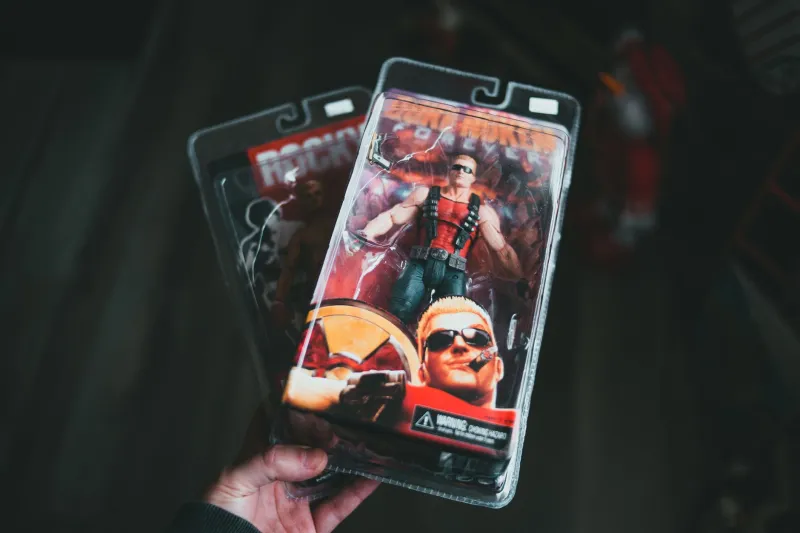
Marcus Hale owns a near-complete run of Amazing Fantasy #15 reprints, a wall of graded Silver Age Marvels, and a shelf of vintage G.I. Joe figures he lets his nephews handle when they visit. He also owns a second shelf — locked, climate-controlled, untouched — holding near-identical versions of many of those same pieces. Sealed. Graded where possible. Never opened, never displayed, never touched by curious seven-year-olds.
"People think I'm crazy," he admits, laughing. "But I sleep better knowing I've got the backup."
Marcus isn't alone. Across the collecting world — vintage toys, comics, trading cards, video games — a quiet but significant trend has been building: intentional duplicate collecting. Enthusiasts are purchasing sealed versions of items they already own and actively enjoy, treating the second copy as something between an insurance policy and a long-term investment. It's a strategy that raises real questions about where the hobby is heading, and whether the collectors practicing it are ahead of the curve or inflating a bubble they'll eventually have to explain to themselves.
What's Actually Driving This?
The psychology here isn't hard to untangle once you start pulling threads. For a lot of collectors, the sealed duplicate solves a tension that's always existed in the hobby: the conflict between using something and preserving its value.
Take vintage gaming. Someone who grew up playing Earthbound on the Super Nintendo might have spent years tracking down a complete-in-box copy. They want to play it. They want to put the cartridge in their original hardware and hear that music. But a sealed copy of the same game recently sold for over $4,000 at auction. You're not cracking that open on a Saturday afternoon.
The duplicate solves it cleanly. One copy gets played. One copy gets vaulted.
"It's basically what serious wine collectors have been doing for decades," says Dana Whitfield, a vintage toy dealer based in Phoenix who sees this behavior regularly at shows and through her online storefront. "You buy a case of something you love. You drink some of it. You hold the rest and see what happens."
That analogy resonates across categories. Comic collectors who cracked open their original copies as kids — and now watch CGC-graded versions of the same issues sell at multiples of what they paid — understand viscerally why having an untouched version matters. The opened copy is the experience. The sealed copy is the asset.
The Financial Logic (and Its Limits)
From a pure investment standpoint, the duplicate strategy has some genuine merit — but it's not without risk.
The argument in favor goes like this: collectibles in sealed, unaltered condition have consistently commanded significant premiums over their opened or used counterparts. A graded 9.8 Pokémon card can be worth ten times its ungraded equivalent. A factory-sealed Nintendo 64 game in excellent condition can outperform a complete-in-box copy by a factor of three or four. If you already have conviction in a category's long-term value, owning the premium version of the same asset is simply owning more of what you believe in.
Jeremy Okoro, a financial advisor in Atlanta who collects vintage basketball cards as a side passion, frames it in terms he uses with clients. "Diversification is fine, but concentration in your highest-conviction positions is also a legitimate strategy. If I think 1986 Fleer basketball is going to keep appreciating, why wouldn't I own more of it in the best possible condition?"
But the counterargument is worth taking seriously. Duplicate collecting assumes continued appreciation in a market that has, in several categories, already seen explosive run-ups. Funko Pop collectors who bought multiples during the pandemic hype cycle found themselves sitting on duplicate liabilities, not duplicate assets, when the market corrected sharply. The duplicate strategy only works if the underlying asset keeps going up — or at minimum, holds its value long enough to matter.
There's also the liquidity question. Collectibles aren't stocks. Selling a sealed duplicate of a vintage toy or comic means finding a buyer at the right moment, navigating grading fees, platform commissions, and shipping risks. The friction is real.
FOMO in a Sealed Box
Not everyone buying duplicates is running a spreadsheet. Some of it — maybe a lot of it — is emotionally driven.
The fear of missing out has always had a presence in collecting, but it's intensified in the social media era. Watching a sealed copy of something you own open-box sell for double what you paid has a way of making you reach for your wallet even when the rational case is thin. Collectors talk about this honestly, at least in private.
"I bought a second copy of a graded comic I already own because I saw the same issue sell for way more than mine was graded," admits one collector in an online forum thread that sparked hundreds of replies from people sharing similar stories. "Did I need it? No. Did it feel like I was doing something smart? Also no, honestly."
This is where the duplicate trend gets complicated. When it's a disciplined financial strategy executed by experienced collectors with clear exit plans, it signals a maturing market — one where participants are sophisticated enough to separate the emotional experience of collecting from the asset management side of it. When it's anxiety-driven accumulation dressed up in investment language, it starts to look like a symptom of overheated markets and collector insecurity.
The truth, as usual, is probably both.
What the Duplicates Tell Us About the Market
Here's the thing: the fact that duplicate collecting exists at scale says something meaningful about where collecting culture is right now.
For most of the hobby's history, owning two of something was considered eccentric at best. The point was to find the thing, not hoard it. But as collectibles have moved from niche passion to mainstream asset class — with auction records, grading companies, and investment funds all legitimizing the financial side — it's natural that collectors would start behaving more like investors.
That's not inherently bad. But it does change the culture. Markets that attract purely financial buyers tend to lose the texture that made them interesting in the first place. If everyone is buying sealed duplicates to vault, eventually there are fewer items in circulation for the collectors who actually want to engage with the stuff.
Dana Whitfield puts it plainly: "I love that people take this seriously as an investment. But I hope we don't get to a point where nothing gets opened, nothing gets used, and the whole hobby becomes a storage unit full of stuff nobody's actually enjoying."
Marcus, for his part, doesn't think he's killing the hobby. He still lets his nephews play with his G.I. Joes. He just makes sure the ones they're handling aren't the ones with a grading sticker on them.
"The vault stuff is for later," he says. "The fun stuff is for now. You need both."
Maybe that's the healthiest version of this trend — collectors who understand the difference between the two, and are intentional about keeping them separate. The vault and the shelf. The asset and the joy. Both have their place, as long as you know which is which.