The Last Piece Problem: How Chasing Completion Can Torch Your Collection's Returns

There's a moment every serious collector knows. You're ninety-nine percent of the way there. The binder is nearly full, the display shelf is almost symmetrical, and the one thing standing between you and a complete set is a single elusive item. It could be a holographic Charizard, a 1952 Topps Mickey Mantle, a first-edition Kenner figure still sealed in its blister pack. Whatever it is, it's out there — and suddenly, nothing else matters.
This is where the math stops making sense.
And if you're not careful, this is where a smart, profitable collection quietly becomes a cautionary tale.
The Numbers Don't Lie, But Your Brain Does
Let's get concrete. Say you've spent two years and $1,800 carefully assembling 49 out of 50 cards in a vintage non-sports trading card set. You bought smart — picking up commons at estate sales, snagging mid-tier cards from collectors who didn't know what they had. Your cost basis is solid. Your collection, if sold complete, could fetch somewhere north of $4,000. That's a real return.
Then you find the 50th card. It's listed at $2,200.
Suddenly your $4,000 complete set cost you $4,000 to build. The margin evaporates. The ROI you were quietly proud of? Gone.
This isn't a hypothetical. Versions of this story play out constantly in collecting communities across the country, from Pokemon cards to vintage G.I. Joe figures to rare vinyl pressings. The final piece of any desirable set almost always commands a premium that defies conventional valuation logic — and sellers know it.
Why Sellers Love a Completionist
Here's the uncomfortable truth: the moment you signal that you need something, you've handed your negotiating leverage to the other side of the table. Experienced dealers and private sellers can smell a completionist from a mile away. They know that someone chasing the last item in a set isn't shopping with a clear head. They're shopping with an itch they desperately need to scratch.
Behavioral economists have a term for this: the endowment effect meets loss aversion. When you're that close to finishing something, the psychological cost of not completing it feels greater than the financial cost of overpaying. Your brain starts treating the incomplete collection almost like a loss — even though you never had the full set to begin with.
Dr. Christopher Olivola, a behavioral economist at Carnegie Mellon who has studied consumer decision-making, has noted that people systematically overvalue the feeling of completion relative to its actual utility. "Finishing a set triggers a reward response in the brain that's disproportionate to the objective value of the final item," he's explained in academic contexts. In plain terms: your dopamine doesn't know what things cost.
Real-World Wreckage
Talk to collectors long enough and the stories start piling up.
One sports card collector in the midwest spent three years building a complete run of 1986-87 Fleer basketball cards — a set that includes the iconic Michael Jordan rookie. He picked up 131 of the 132 cards for a combined $3,400, buying strategically and patiently. The Jordan rookie, the final card, cost him $8,500 at auction. His total outlay: nearly $12,000 for a set with a market value around $14,000. Not a disaster, but a far cry from the return he'd have seen selling the 131-card partial set and walking away.
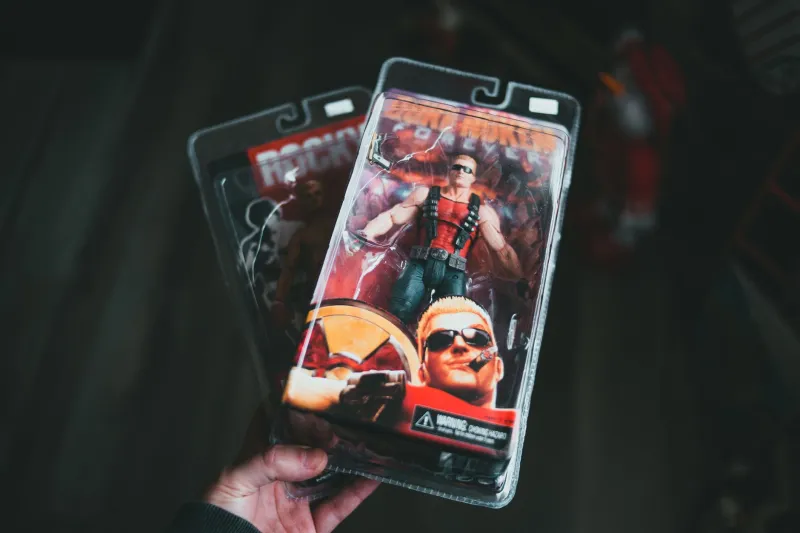
Action figure collectors face the same trap. Complete vintage He-Man or Transformers sets can command serious premiums — but the last figure in any given wave is almost always the one that was shortpacked at retail, meaning fewer were made and fewer survived. Collectors routinely report that a single shortpacked figure costs more than the other dozen figures in a wave combined. The completionist premium is baked right into the secondary market.
Vintage video game set builders know this pain intimately. Complete licensed NES libraries — all 677 officially released titles — have sold for six figures. But a handful of ultra-rare titles like Stadium Events or Nintendo World Championships cartridges account for a staggering portion of that total cost. One collector documented publicly that his final five NES acquisitions cost more than his first 600 combined.
The Partial Set Paradox
Here's what makes this especially tricky from an investment standpoint: a near-complete set is often worth less than the sum of its parts sold individually. Which means the smartest financial move — selling your 49-card collection as individual cards to buyers who want specific pieces — is also the move that feels the most psychologically painful.
You'd be breaking up something you built. Scattering it. Letting go of the almost-finished thing. For most collectors, that feels genuinely bad, even when the spreadsheet says it's the right call.
This is the completionist's curse in its purest form: the collection itself becomes the trap.
How to Protect Yourself From Your Own Brain
None of this means you should never complete a set. Sometimes the personal satisfaction is worth the premium. Sometimes a complete set genuinely does unlock a valuation tier that makes the math work. But there are a few habits worth building before you reach that final-piece moment.
Set a ceiling before you start, not when you're desperate. When you begin a set, research what the hardest-to-find pieces typically sell for. Build that number into your total budget from day one. If the math doesn't work with that ceiling in place, it won't work when you're emotionally invested either.
Treat the last piece like a separate purchase. Don't think of it as "completing your collection." Think of it as buying a single item. Would you pay that price for that item if you had zero emotional stake in it? If the answer is no, that's useful information.
Know your exit. Are you collecting for the love of it, or are you collecting as an investment? Both are valid, but they require different decisions at the finish line. If it's purely passion-driven, overpaying for completion is a personal choice. If you're expecting a financial return, you need to run the numbers honestly — including that final piece.
Consider the "complete minus one" strategy. In some markets, a near-complete set with the most expensive piece absent can be sold to other collectors at a solid price. They may already own the hard piece and just need the rest. It's worth exploring before you torch your returns on an overpriced final item.
The Vault Perspective
At CollectorsVault, we talk a lot about the emotional side of collecting — because pretending it doesn't exist is how people make bad decisions. The drive to finish something is real, it's human, and there's nothing wrong with feeling it. But the collectors who build genuine long-term value are the ones who can feel that pull and still pause long enough to ask: does this actually make sense?
Sometimes the answer is yes. Sometimes the complete set is worth every penny of the premium.
But sometimes the smartest thing you can do is stop at 49 — and let someone else pay through the nose for the last card.