Climate, Coverage, and Cold Hard Cash: How Smart Storage Is Quietly Minting Collector Fortunes
There's a guy in suburban Phoenix — let's call him Marcus — who keeps a spreadsheet for everything. Not just what he paid for his collection of original-run Marvel Silver Age books, but the temperature and humidity readings from the room where they live, logged twice daily. He photographs every slab before it goes on the shelf. He has a separate insurance rider that covers replacement value, not purchase price. His collection has appreciated roughly 34% over the past four years.
Then there's the other guy. You probably know someone like him too. He's got a long box of comics in the garage, a shoebox of rookie cards under the bed, and a handful of limited-edition figures still in the original packaging — sitting in a closet next to the water heater. He thinks he's sitting on treasure. He might be sitting on a tax write-off.
The difference between these two collectors isn't just discipline. It's infrastructure. And in today's collectibles market, infrastructure might be the highest-return investment you're not making.
The Hidden Destroyer: Environment
Here's something conservation experts will tell you that most hobbyists don't want to hear: your collection is degrading right now. Unless you've taken active steps to stop it, heat, humidity, UV light, and fluctuating temperatures are doing slow, invisible damage to everything from trading cards to vintage vinyl to action figures still in the box.
Paper-based collectibles are especially vulnerable. Comics, cards, and original artwork are all hygroscopic — meaning they absorb and release moisture based on ambient humidity. That cycle causes paper to expand and contract, leading to brittleness, yellowing, and waviness that graders absolutely hammer you for. A comic that might grade a 9.4 out of your climate-controlled setup could come back a 7.0 after a few years in a humid basement. That's not a minor haircut. On a key issue, that grade difference can mean thousands of dollars.
Vintage electronics and video games face a different set of enemies: oxidation, battery leakage, and the slow breakdown of adhesives and plastics. Sealed games are particularly tricky — the very thing that makes them valuable (the seal) is also a membrane that traps humidity against the cartridge inside.
Figures and vinyl toys? UV fading, plastic degradation, and what collectors grimly call "yellowing" — a chemical process that turns white or light-colored plastics an uneven, ugly tan. It's irreversible. It destroys value.
What "Vault-Style" Storage Actually Looks Like
The collectors who are consistently outperforming the market on resale aren't necessarily buying better than everyone else. They're preserving better.
At the serious end of the spectrum, vault-style storage means climate control locked between 65–70°F with relative humidity held at 45–55%. It means UV-filtering acrylic cases or UV-blocking window film on any room with natural light. It means acid-free backing boards, Mylar sleeves, and archival-quality boxes — not the cheap polypropylene bags from the dollar bin at a comic show.
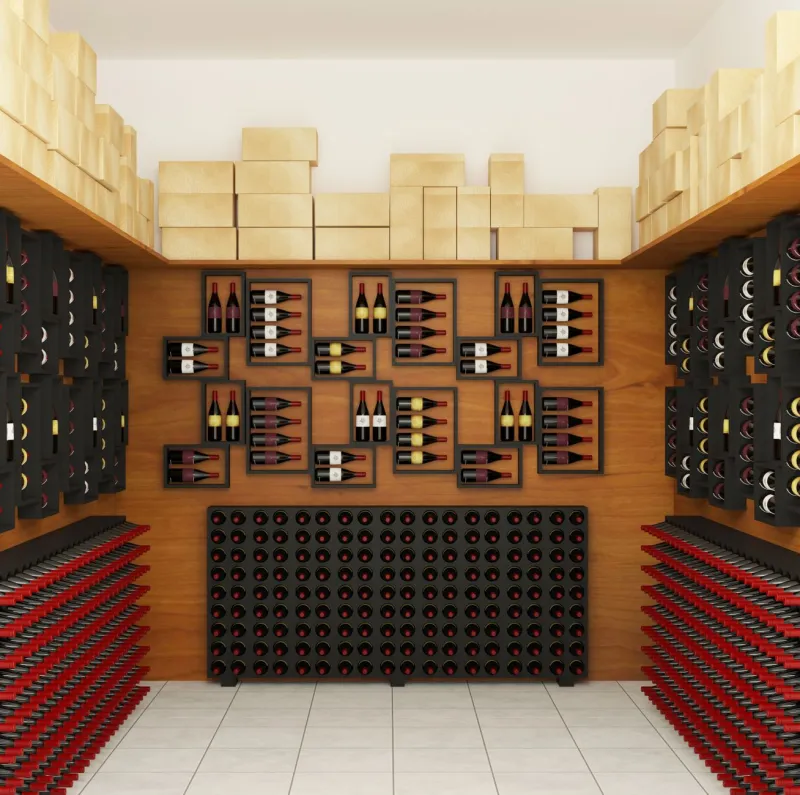
For high-value items, some collectors are going even further. Purpose-built storage units — think repurposed wine fridges or actual archival cabinets — are showing up in collector setups across the country. A few enthusiasts in major metro areas are renting climate-controlled units from specialty art storage facilities, the same places museums use to house pieces between exhibitions. Monthly costs run anywhere from $80 to several hundred dollars depending on size and location, but collectors who've done the math say the preservation premium more than covers the fee when it comes time to sell.
"I look at storage cost as part of my acquisition cost," says one New York-based collector who focuses on graded sports cards. "If I'm spending $500 on a card, I'm already thinking about where it lives. The storage overhead is just part of the investment thesis."
The Documentation Game
Beyond physical preservation, the collectors building real long-term value have cracked something most hobbyists completely ignore: the paper trail.
Provenance matters. It has always mattered in fine art, and it's increasingly mattering in collectibles. A graded card with a documented chain of custody — original purchase receipt, grading submission records, storage history — is a more compelling asset to a serious buyer than an identical card with zero paper trail. It's not just about authenticity. It's about confidence.
Smart collectors are building what some in the community have started calling "collection portfolios" — organized documentation that includes purchase records, condition photos taken at acquisition, grading certificates, insurance appraisals, and storage logs. It sounds obsessive until you try to sell a high-value item to a sophisticated buyer who asks for provenance and you've got nothing.
Apps like Collectify and CLZ have made this easier, letting collectors log items, attach photos, and track current market values. But the truly serious players are going beyond apps — maintaining physical binders, cloud backups, and in some cases working with professional appraisers to generate annual valuations that feed directly into their insurance coverage.
Insurance: The Most Overlooked ROI in Collecting
Speak to any collector who's had something go wrong — a flood, a fire, a break-in — and the conversation eventually turns to insurance. Specifically, the difference between having the right insurance and assuming your homeowner's policy has you covered.
Spoiler: it probably doesn't. Standard homeowner's policies typically cap personal property claims at replacement cost for "common" items and apply strict limits to collectibles, jewelry, and valuables. A $15,000 collection of graded cards might get you $2,500 under a basic policy. Maybe less.
Specialty collectors insurance — offered through providers like American Collectors Insurance, Collectibles Insurance Services, and a handful of Lloyd's syndicates — covers agreed value, meaning you and the insurer agree on what the collection is worth before anything happens. No depreciation. No fighting over replacement cost. You document the value, you pay the premium, and if something goes wrong, you're made whole.
The premium costs are genuinely reasonable relative to the coverage. A collection valued at $50,000 might run $300–$500 annually depending on storage conditions and security. Collectors with climate-controlled, alarmed, and documented setups typically qualify for lower rates — which creates a nice feedback loop where smart storage literally pays for itself in reduced insurance costs.
The Bottom Line on the Bottom Line
Here's the uncomfortable truth about collecting as investment: the purchase is only the beginning. What you do after you buy determines a huge chunk of your eventual return.
The collectors who are quietly beating the market aren't just better pickers. They've built systems. They've treated their collections less like hobbies and more like portfolios — with all the infrastructure, documentation, and risk management that implies.
For casual collectors, that might sound like overkill. But if you've spent real money building a collection, the question isn't whether you can afford to store it properly. It's whether you can afford not to.