Behind Closed Doors: Why Private Collections Are Quietly Outclassing the World's Great Museums
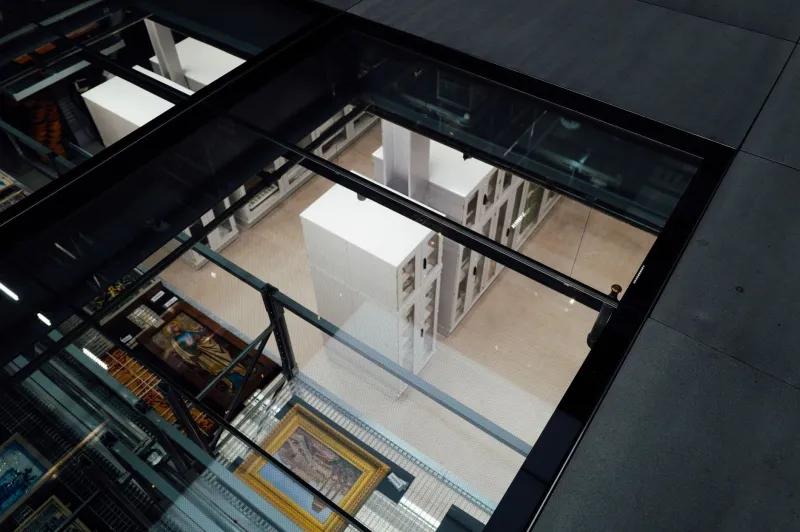
There's a room somewhere in suburban Connecticut — climate-controlled to within half a degree, humidity-monitored around the clock — that holds more original Golden Age comic art than the Library of Congress. The guy who owns it isn't a hedge fund manager or a tech billionaire. He's a retired orthodontist who spent forty years buying quietly, storing carefully, and saying almost nothing about it.
He's not alone. Across the country, a particular breed of serious enthusiast has been assembling private collections so deep, so focused, and so meticulously documented that major auction houses now call them first — before they call the institutions.
This is what some in the trade are starting to call the Vault Effect: the slow, steady migration of the world's most significant collectibles out of public view and into private hands that, increasingly, know exactly what they're doing.
When Passion Becomes Authority
Museums have always relied on donor relationships to build their holdings. What's changed is the direction of influence. For most of the twentieth century, private collectors aspired to institutional validation — a loan to the Met, a mention in a catalog essay, maybe an eventual bequest. The museum conferred legitimacy.
That dynamic has started to flip.
Today's most serious collectors aren't waiting for curatorial approval. They're hiring their own scholars, commissioning their own research, and publishing their own reference catalogs — the kind of deep-dive documentation that becomes the standard citation in the field. When your collection is comprehensive enough, and your research rigorous enough, you become the authority. Institutions start calling you.
In the vintage photography world, for instance, several private collectors have amassed holdings so complete that major galleries now route authentication questions through them rather than through academic departments. The same pattern shows up in pre-Columbian antiquities, early American folk art, and original video game concept art — niches where private passion outpaced institutional acquisition budgets decades ago.
The Numbers Don't Lie
From a pure investment standpoint, the math behind deep private collecting is getting harder to ignore. Museum-quality pieces — meaning objects with airtight provenance, scholarly documentation, and demonstrable rarity — have historically held value through market downturns better than almost any other collectible tier.
But here's what's changed: because major institutions face tighter acquisition budgets, stricter provenance requirements, and longer approval chains, they're increasingly unable to compete at auction for top-tier material. That's pushed the best pieces toward private buyers who can move faster and pay more.
The result is a feedback loop. Private collectors get the best pieces. The best pieces generate the most scholarly interest. Scholarly interest produces documentation and authentication that increases value. Higher value attracts more serious buyers. Repeat.
For collectors who got in early on focused, museum-depth acquisition strategies — think complete runs, not cherry-picked highlights — the appreciation numbers over the past two decades have been quietly extraordinary.
The Credibility Play
There's another angle here that doesn't get talked about enough in collecting circles: reputational capital.
A collector who owns twenty significant pieces in a niche is a buyer. A collector who owns two hundred significant pieces, has funded original research, and lent works to major traveling exhibitions is something else entirely. They're a resource. An authority. Someone whose opinion on authenticity, condition, and historical context carries genuine weight.
That credibility has real, measurable financial value. It affects what dealers offer you first. It affects what price you can command when you eventually sell. It affects whether auction houses give you private previews, early estimates, and favorable reserves.
In short, building a collection to institutional depth isn't just about the objects. It's about positioning yourself as a serious player in a market where relationships and reputation drive access to the best material.
The Cultural Tension Nobody Wants to Talk About
Here's the uncomfortable flip side of all this.
When a piece enters a private vault — even a beautifully maintained, meticulously documented private vault — it disappears from public view. Researchers may be able to access it by appointment. It might travel for a loan exhibition every few years. But for most people, it's gone.
This creates a genuine cultural tension that the collecting community tends to sidestep. The argument for private collecting is straightforward: private owners often preserve objects better, document them more thoroughly, and make faster, smarter acquisition decisions than institutions burdened by committee structures and donor politics. All of that is true.
But museums exist, at least in theory, to hold cultural patrimony in public trust. When the best artifacts end up in private hands — even responsible, knowledgeable private hands — something is lost from the shared cultural record, even if the objects themselves are in better physical shape than they'd be in a cash-strapped regional museum.
Most serious collectors land somewhere complicated on this question. They believe deeply in their right to own and steward significant objects. They also, often, feel a genuine pull toward eventual public access — through loans, through published research, through bequests that outlast them.
What This Means If You're Building a Collection Right Now
If you're a collector with serious long-term ambitions — not just accumulating, but genuinely building — the Vault Effect has some practical implications worth thinking through.
Depth beats breadth. A collection of fifty exceptional, well-documented pieces in a focused niche will almost always outperform five hundred loosely related items in terms of both value appreciation and credibility. Institutions think in depth. Serious buyers think in depth. You should too.
Documentation is an asset. Every piece you acquire should come with the best available provenance documentation, and you should actively add to it. Commission research. Photograph condition. Record acquisition context. The paper trail you build today is a significant portion of the value you'll realize tomorrow.
Loans and visibility matter. Keeping everything locked away has real costs. Strategic loans to legitimate exhibitions build your collection's scholarly record, generate citations and catalog entries, and maintain the kind of visibility that keeps serious dealers and institutions in your orbit.
Think about legacy early. The collectors who've navigated the Vault Effect most successfully have clear plans for what happens to their holdings over time — whether that's a structured bequest, a private foundation, a negotiated institutional partnership, or a carefully timed dispersal at auction. Vagueness about legacy tends to result in chaotic estate sales that undervalue everything.
The Vault Is Only as Good as the Vision Behind It
The orthodontist in Connecticut, it turns out, has spent the last five years working with a university press on a definitive catalog of his holdings. He's negotiated a long-term loan agreement with a regional museum. He's funding two graduate fellowships in the field.
His collection isn't locked away. It's the center of a living scholarly ecosystem — one that he built, piece by careful piece, over four decades of patient, focused acquisition.
That's the version of the Vault Effect worth aspiring to. Not secrecy for its own sake, but depth, documentation, and deliberate stewardship that makes your collection more than a financial asset. It makes it a record.
And records, as any serious collector knows, tend to hold their value.