Boxed In: Why So Many Collectors Never Actually Live With Their Collections
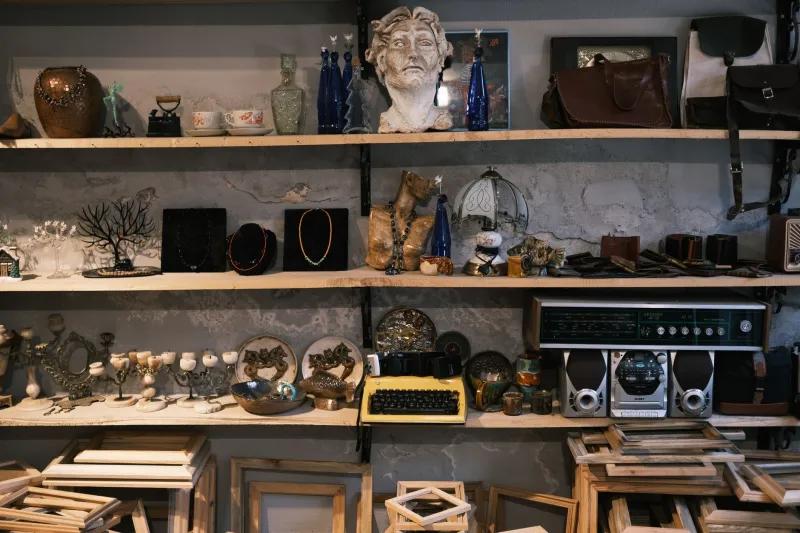
There's a certain kind of collector story that doesn't get told enough. It goes like this: person discovers a passion, spends years building a genuinely impressive collection, and then — nothing. The pieces sit in bins, in boxes, in a storage unit off the highway, or stacked behind the couch in a spare room nobody uses. The collection exists. It just doesn't live anywhere.
This isn't a rare edge case. Talk to enough serious collectors and you'll find it's practically an epidemic. Call it display paralysis, call it collector hoarding, call it whatever you want — the result is the same. Beautiful, valuable, meaningful objects gathering dust while their owners scroll Instagram looking at other people's perfectly lit shelving setups and feeling vaguely inadequate.
Let's dig into what's actually happening here, why it matters more than most collectors want to admit, and how to break out of it.
The Instagram Trap Nobody Talks About
Social media was supposed to be a gift for collectors. And in some ways, it genuinely was — platforms like Instagram and Reddit connected enthusiasts across the country, surfaced rare finds, and built communities around niches that used to feel totally isolated.
But there's a flip side that doesn't get discussed nearly enough. When your reference point for a "good" collection display is the most obsessively curated, professionally lit, perfectly arranged shelves on the internet, your own living room starts to feel like a failure before you even begin.
Collectors who used to happily display their vintage Star Wars figures on a bookshelf now feel like they need custom acrylic risers, UV-filtering display cases, color-coordinated backdrops, and ring lighting before anything goes up. The bar for what counts as a "real" display has been set by the top one percent of display enthusiasts — and it's freezing everyone else in place.
The cruel irony is that chasing that perfect display becomes another form of collecting. You start acquiring display furniture, storage solutions, and organizational tools instead of actually arranging anything. The hobby about collecting has spawned a sub-hobby about preparing to display your collection someday, when everything is finally just right.
Spoiler: that day rarely comes.
What Display Paralysis Actually Costs You
This might feel like a soft, psychological issue — more therapy-adjacent than finance-adjacent. But the financial reality of never displaying your collection is genuinely ugly.
First, there's storage. If any portion of your collection lives off-site in a rented unit, you're paying monthly fees for the privilege of not enjoying your stuff. Climate-controlled storage in most major US metros runs anywhere from $100 to $400 a month depending on size. Over a few years, that's real money — money that could have funded more acquisitions or gone straight back into your pocket.
Second, insurance gets complicated fast when your collection doesn't have a defined home. Scheduled personal property coverage — the kind that actually protects serious collectibles — typically requires documentation of where items are kept and how they're stored. A collection spread across three locations, half of it in unmarked boxes, is an insurance nightmare waiting to happen. Claims get contested. Coverage gaps appear. Adjusters ask questions you can't answer.
Third, and this one stings: items you never interact with are items you stop understanding. The collector who handles their pieces, studies them, notices condition changes and market shifts, is a collector who makes smart decisions. The one who treats their collection like a warehouse is flying blind. You can't manage what you're not actually looking at.
The Psychology Behind Why We Stall
So why do so many collectors — smart, passionate, experienced people — fall into this trap?
Part of it is perfectionism, and the Instagram effect feeds directly into that. But there's something deeper going on too. For a lot of collectors, the hunt is the high. Researching, tracking down, negotiating, acquiring — that's where the dopamine lives. The display is the aftermath, and aftermath is boring.
There's also a subtle fear of finality. As long as your collection isn't displayed, it's still in a state of becoming. You haven't committed to an arrangement, which means you haven't admitted that your collection has a shape, an identity, maybe even limitations. Keeping everything in boxes is a way of keeping the dream alive — the dream of the ultimate, complete, perfectly organized collection that exists just over the horizon.
And then there's loss aversion. What if you display something and it gets damaged? What if sunlight fades it, or a kid knocks it over, or you just make a layout choice you regret? Better to keep it safe in its box, where nothing bad can happen.
Except something bad is already happening: you're not enjoying it.
Breaking the Cycle Without Losing Your Mind
The good news is that display paralysis isn't permanent. Here's what actually works for collectors who've pushed through it.
Start ugly. Seriously. Pick fifteen pieces, put them on a shelf, don't overthink it. An imperfect display you can see every day beats a perfect display that exists only in your imagination. You can always rearrange. You can always upgrade. But you have to start somewhere.
Curate ruthlessly. Not everything needs to be out. In fact, trying to display everything at once is often what kills the whole project before it starts. Pick a theme, a era, a vibe — whatever makes a coherent story — and build around that. Rotate pieces in and out seasonally if you want. Curation is a skill, and it gets better with practice.
Decouple display from acquisition. Set a rule for yourself: before you buy something new, you have to find a place for it in your current display. This forces you to actually engage with what you already own and breaks the cycle of endless accumulation without arrangement.
Treat your display as a living document. The collectors who seem most at peace with their setups are the ones who think of their displays as always in progress rather than never started. Something is always moving, something is always being swapped out. That mindset takes the pressure off perfection and makes the whole thing feel like part of the hobby rather than a separate, overwhelming project.
Get your insurance sorted first. If nothing else motivates you to establish a proper display and document your collection, let it be this. Take photos. Create a spreadsheet. Know what you own, where it is, and what it's worth. Your future self — the one who might someday need to file a claim — will thank you.
The Collection That Only Exists on Paper
Here's the hard truth at the center of all this: a collection you never interact with isn't really a collection. It's an inventory. It's a portfolio. It might even be a decent investment, depending on what you've got. But it's not a collection in any meaningful sense of the word.
Collecting, at its best, is about connection — to history, to craft, to the culture and community around a particular thing. You can't have that connection through a storage unit door. You can't have it by scrolling someone else's display photos at midnight.
The vault is a great place to protect what matters. But at some point, you have to open the door.