Paper Trails and Tall Tales: How Forged Provenance Is Fooling Even the Most Seasoned Collectors
There's a particular kind of confidence that comes with buying a collectible that arrives with a thick folder of documentation. A certificate of authenticity. A chain of ownership stretching back decades. Maybe even a letter from a previous owner with some famous last name attached. It feels bulletproof.
Except sometimes, every single page of that folder is a lie.
Provenance fraud — the art of fabricating or manipulating an item's ownership history and authentication paperwork — has quietly become one of the most damaging problems in the collectibles world. And unlike outright fakes, where a sharp eye or a UV light might catch the forgery, provenance fraud targets the documentation layer. The part most buyers trust without question.
"People spend enormous energy examining the object itself," says Marcus Delray, an independent collectibles fraud consultant based out of Chicago who has worked with auction houses and private collectors for over fifteen years. "But they'll glance at a certificate for thirty seconds and call it done. That's exactly the gap that bad actors exploit."
When the Paper Is the Product
Here's the uncomfortable truth: in many high-value transactions, the documentation is what's being sold. A signed baseball is worth a few hundred bucks without provenance. With a credible chain of custody linking it to a specific game, a specific player interaction, and a recognized authentication service — that same ball can command thousands.
That premium on paperwork creates an obvious incentive. And the market for forged provenance has grown sophisticated enough that even experienced collectors get burned.
In 2021, a California-based collector paid over $18,000 for what was presented as a game-worn jersey from a Hall of Fame NFL player, complete with a letter of provenance from a now-defunct sports memorabilia dealer and a third-party grading certificate. Two years later, when the collector attempted to resell through a major auction house, their authentication team flagged inconsistencies in the certificate's typography and a letter that referenced a sports event using terminology that didn't exist until years after the letter was supposedly written. The jersey itself? Probably vintage. The story attached to it? Almost certainly invented.
The Legal Grey Zone Nobody Wants to Talk About
Here's where things get genuinely frustrating: in many cases, the people selling items with forged provenance face limited legal exposure. Fraud laws require proving intent, and sellers operating in good faith — even if recklessly — can often claim they simply passed along documentation they received.
"There's a real accountability vacuum in the secondary market," explains Renata Solís, a consumer protection attorney in New York who has handled several collectibles fraud cases. "Unless you can prove the seller knew the documentation was false, you're often left pursuing civil remedies that cost more than the item was worth."
This gray zone is especially murky in estate sales, private transactions, and informal online marketplaces where items change hands without any institutional oversight. A forged provenance document doesn't need to fool an expert permanently — it just needs to survive long enough to complete a sale.
Real Red Flags You Can Actually Spot
So how do you protect yourself? The good news is that forged provenance tends to leave tracks, if you know where to look.
Anachronistic language or references. Like the NFL jersey letter above, fabricated documents often contain subtle anachronisms — words, phrases, or references that didn't exist at the time of writing. If a letter from 1987 references a grading company that wasn't founded until 1995, that's a problem.
Certificates from dissolved or unverifiable companies. Forgers love using defunct authentication services because there's no one left to call. Always verify that a certifying company actually existed, operated during the claimed period, and used the format shown on the certificate. Many legitimate services maintain online registries — use them.
Suspiciously complete ownership chains. Real provenance is often messy. Items disappear for years, pass through estates without documentation, get forgotten in storage. A perfectly unbroken chain of custody with tidy documentation at every step can actually be a warning sign, not a selling point.
Signatures that don't match known exemplars. If a letter of provenance is signed by a notable collector, dealer, or athlete, compare that signature against verified examples online. Auction house archives, signed first editions, and sports card databases all offer reference points.
Thermal or UV inconsistencies in paper documents. Aged paper behaves differently under UV light and shows specific yellowing patterns. A document that claims to be from 1975 but shows uniform aging — or paper that fluoresces brightly under UV (a sign of modern optical brighteners) — deserves serious scrutiny.
Going Beyond the Certificate
The single biggest mistake collectors make is treating authentication as a binary. Either something has a certificate or it doesn't. In reality, a certificate is just the starting point of verification, not the finish line.
Delray recommends what he calls "provenance triangulation" — cross-referencing at least three independent sources before accepting a high-value ownership history. That might mean checking old auction catalogs, reaching out to estates or dealers named in the chain, or consulting collector community archives where significant items were publicly discussed.
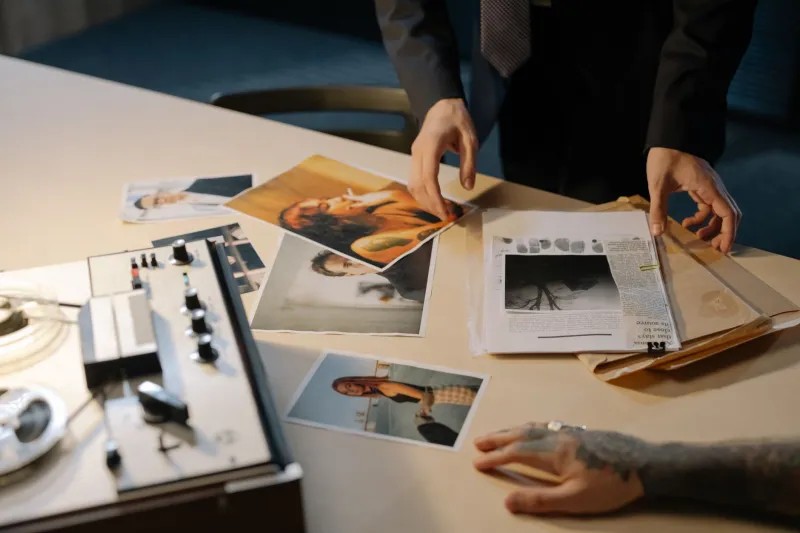
For truly high-stakes purchases, consider commissioning an independent forensic document examination. Several firms specialize in exactly this — analyzing ink composition, paper fiber, printing methods, and aging patterns to date documents independently of what they claim to be.
The collector community itself is also an underused resource. Forums, collector societies, and hobby-specific Discord servers often have institutional memory about specific items, especially pieces that have circulated publicly. If a supposedly legendary item has never shown up in any collector discussion despite a claimed history spanning decades, that silence speaks volumes.
The Vault Takeaway
Authentication was supposed to bring trust to the collectibles market. And legitimate services from recognized graders have genuinely done that — for the objects themselves. But the provenance layer, the story wrapped around the object, remains largely an honor system.
That's not a reason to stop collecting. It is a reason to approach documentation with the same healthy skepticism you'd apply to the item itself. The certificate isn't the end of your due diligence. In a market where paper trails can be as fabricated as the items they describe, it's really just the beginning.
Buy the collectible because you've verified the collectible. Everything else is just paperwork — and paperwork, as it turns out, is surprisingly easy to fake.